An Explainable Machine Learning and Deep Learning System for Post-Operative Dietary Classification in Cardiac Surgery Patients
ID:94
Submission ID:495 View Protection:ATTENDEE
Updated Time:2026-07-25 18:00:20
Hits:15
Online
Start Time:2026-07-31 12:10 (Asia/Kolkata)
Duration:15min
Session:[S6] Artificial Intelligence Use Cases » [S6-5] Artificial Intelligence Use Cases
Video
No Permission
Presentation File
Tips: The file permissions under this presentation are only for participants. You have not logged in yet and cannot view it temporarily.
Abstract
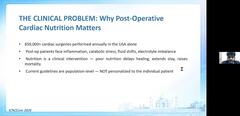
Individualized dietary management of cardiac surgery patients in the post-operative period is a critical clinical challenge affecting wound healing, haemodynamic stability, and long-term outcomes, yet current guidelines offer only population level recommendations. We propose a novel Explainable Machine Learning and Deep Learning framework for post-operative dietary classification. The framework is developed and evaluated on a rule-grounded, algorithmically constructed cohort of 305 cardiac patients—parameterised to published cardiac cohort statistics and augmented with two domain-engineered features (surgery type and recovery day)—yielding a 17-feature input space that enables controlled, fully reproducible evaluation. We benchmark five classifiers (Logistic Regression, Decision Tree, Random Forest, XGBoost, TabNet) that assign patients to three evidence-based regimens: Strict, Moderate, and Standard diets. SHAP [8] and TabNet [12] attention provide dual explainability. Logistic Regression achieved the highest accuracy (77.06%; AUC ROC 0.9153; macro-F1 0.77) and significantly outperformed Random Forest (p = 0.031); SHAP identified recovery day and surgery type as top predictors, consistent with their weighting in the transparent label-generation rule. The framework is deployed as a full-stack clinical web application with role-stratified access, automated PDF reporting, a phase-aware 7-day meal planner aligned to AHA guidelines [3], and a Groq-powered Llama 3.3 70B dietary chatbot grounded by a verbatim classifier-injected system prompt. This work is positioned as an end-to-end proof of-concept evaluation of the proposed clinical decision-support framework, establishing a concrete roadmap for prospective val idation on dietitian-labelled real-world data. To our knowledge, it is the first study to formulate post-operative dietary classification as a supervised ML task, demonstrating the technical feasibility of integrating explainable ML, deep learning, and grounded LLMs into a unified, clinician-interpretable nutritional decision support platform.
Keywords
postoperative cardiac nutrition,dietary classification,explainable AI,SHAP,XGBoost,TabNet,Groq API,Llama 3.3,clinical decision support,machine learning,deep learning
Speaker

Comment submit